
To source products to sell on Amazon, validate the customer need and your ability to list the exact item before committing to inventory. Then compare suppliers against one written product brief, inspect samples, document the purchase, and calculate the cost of a sellable unit using current marketplace fees. Finding a low quote is not the same as finding an item you can list accurately, legally and profitably.
Start with a narrow product hypothesis, check demand and competition in the Amazon store, confirm product and brand selling eligibility in Seller Central, write a measurable specification, verify the supplier and sample, estimate all costs with Amazon's current fee tools, and place a controlled test order. Treat compliance, intellectual-property rights and listing evidence as pre-order questions—not paperwork to solve after inventory arrives.
1. Start with a customer problem, not a supplier catalog
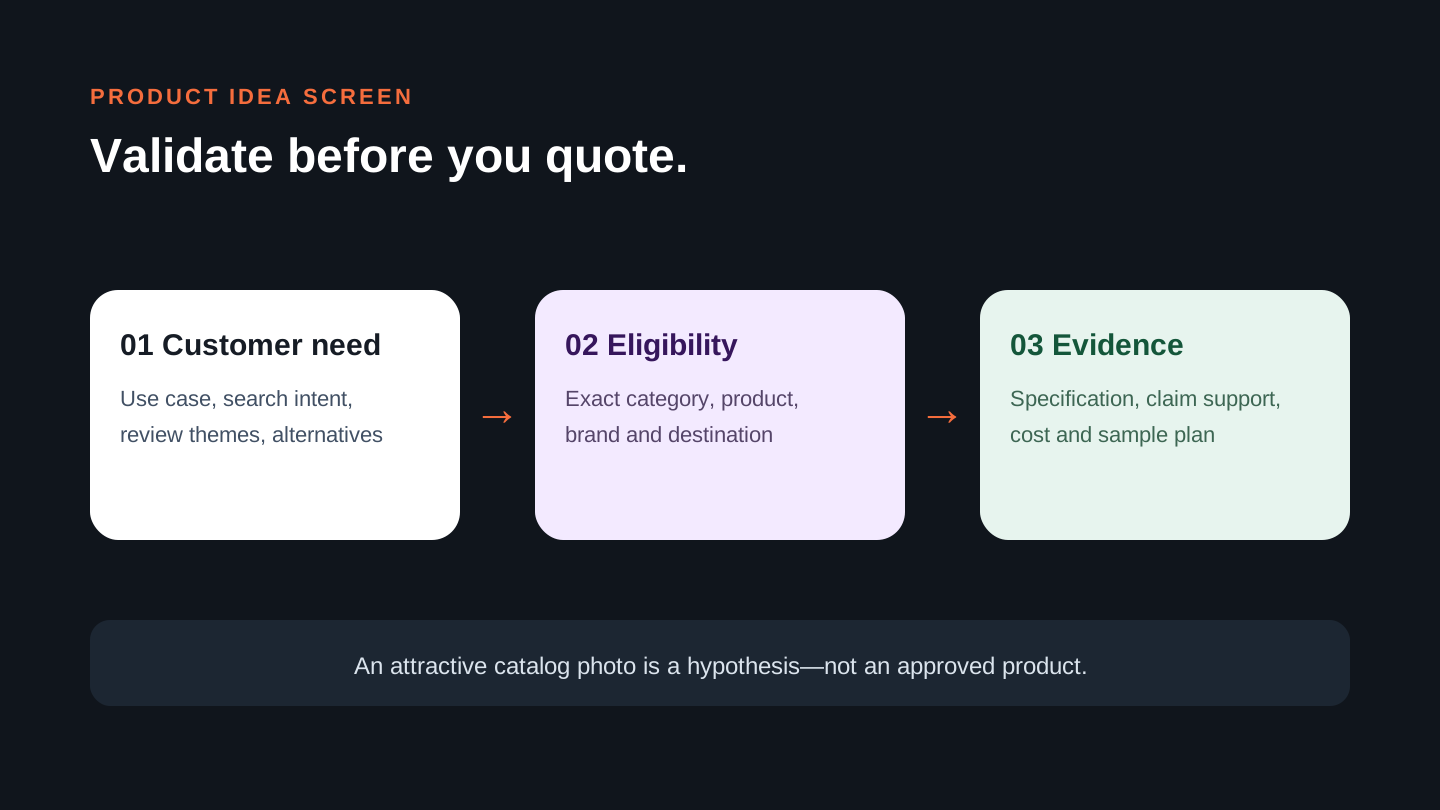
A catalog can suggest products, but it cannot prove what Amazon shoppers want or why they would choose your offer. Define a specific use case and buyer. What existing products meet the need? What questions do shoppers ask? What complaints recur in reviews? Separate a real unmet need from a feature that sounds novel only to the seller.
Search the Amazon store as a customer and inspect the actual result pages: product types, price positions, delivery expectations, review themes and differences between offers. Record what is observable, not a guessed sales number. Amazon's Product Opportunity Explorer can provide eligible sellers with niche-level search, purchasing, review and return insights. It is a research aid, not a guarantee of demand or sales. Check seasonality and whether the idea still makes sense when the initial trend fades.
Write a one-sentence hypothesis: “This product is for [buyer] who needs [use], and the version we plan to source differs in [verifiable attribute].” If you cannot complete that sentence without an unsupported claim, the product brief is not ready.
2. Check whether you can sell the exact product
Before requesting a large order, check the specific category, brand and product in your own Seller Central account. Amazon explains that some categories are open, some require a particular plan or approval, and some products cannot be sold by third-party sellers. Brand restrictions can be separate from category restrictions. The answer for a similar-looking item may not be the answer for yours.
Review the destination-market laws, safety and labeling requirements that apply to the exact product and the claims you intend to make. Do not assume a supplier's certificate covers every variation or market. Compare the manufacturer, model, tested item, issue date and scope on any document with the item you will actually buy. If requirements are unclear, consult an appropriate compliance professional before ordering.
For branded resale, obtain a legitimate source and any required authorization; do not rely on a marketplace screenshot or an unverifiable “authorized distributor” statement. For a new private-label item, check intellectual-property conflicts and the evidence needed to create an accurate listing. Amazon's selling FAQ is a starting point, but the current Seller Central decision for your account and item controls what you can submit.
3. Turn the idea into one comparison brief
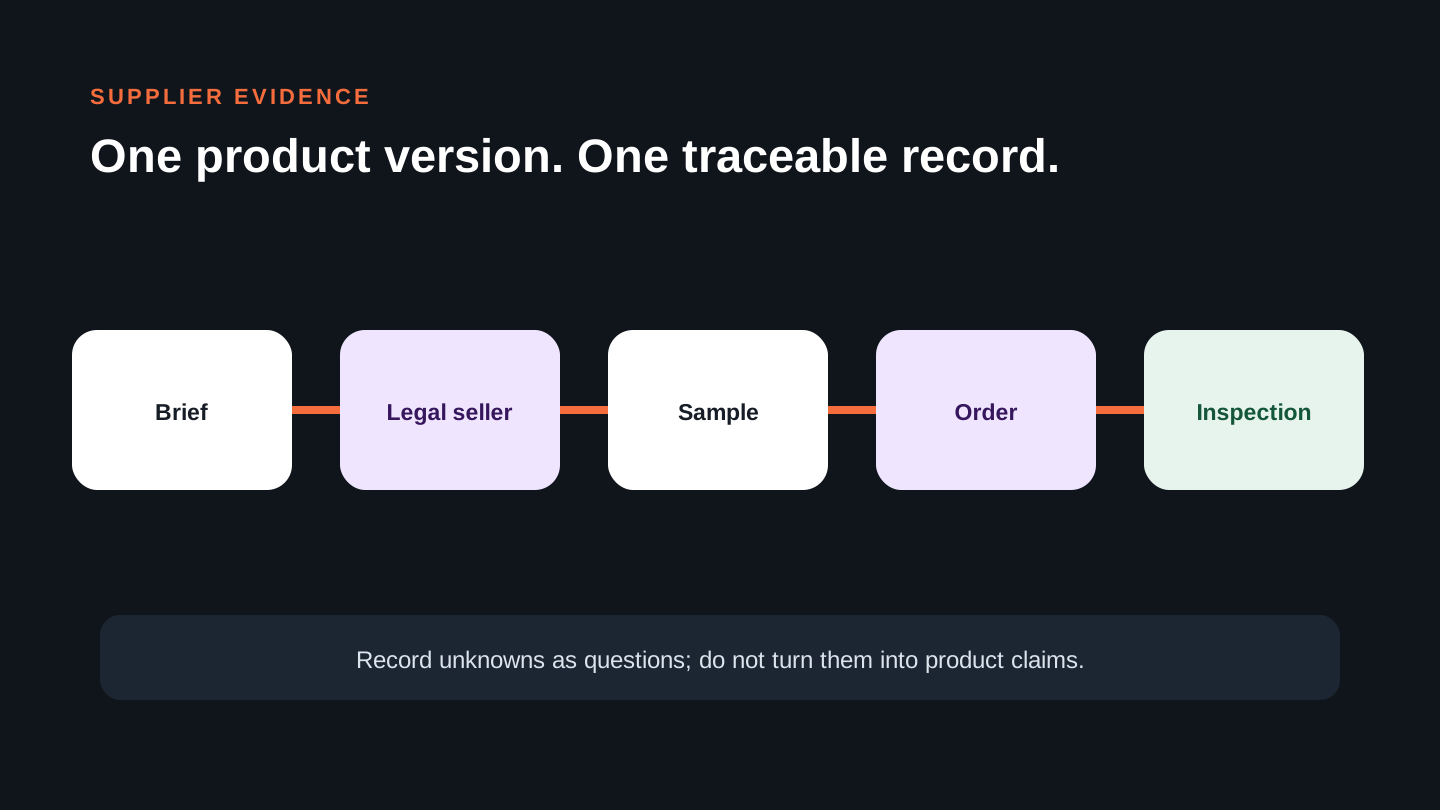
A supplier cannot quote consistently against “something like this photo.” Make a version-controlled brief with the intended function, dimensions or compatibility, appearance, materials to be verified, packaging, labeling, test requirements, order quantity, destination and desired inspection points. Use reference photos with permission, and state which details are examples rather than approved specifications.
Mark every unknown clearly: “supplier to confirm,” “sample to verify,” or “professional compliance review required.” Ask every shortlisted supplier to quote the same revision. That exposes differences in the product, not just differences in their sales presentations. A lower quote may exclude packaging, testing, domestic transport or a production step that another quote includes.
Record whether the offer concerns ready stock, a modified existing product or a new production run. Those routes can have different sample, tooling, minimum, change-control and replenishment questions. Do not promise an MOQ, lead time or customization capability before the specific supplier confirms it in writing.
4. Verify the company behind the quote
Identify the legal seller, factory or subcontractor, invoicing entity and payment beneficiary. They may legitimately differ, but the relationships should be documented. Compare the business name on the profile, quotation, purchase order and invoice. Ask who controls the product specification, who approves changes, and who will resolve a nonconforming batch.
Request evidence relevant to the proposed item, not a generic factory photo. Can the supplier explain the process, material choice, quality checks and packaging plan? Can it show a legitimate comparable example? A badge or polished catalog may aid discovery but does not replace an item-specific review. Our supplier-verification checklist sets out the identity and transaction checks in more detail.
Keep a comparison sheet for each supplier: what was confirmed, what remains unknown, which documents were reviewed, and what the sample must answer. Do not score an unanswered question as a pass simply because a quotation arrived quickly.
5. Inspect the sample as a future customer would
Test the sample against the written brief, not the catalog image. Check the attributes that affect use and returns: size, operation, finish, assembly, fit, packaging, instructions and label accuracy as appropriate to the item. Photograph the actual version in consistent conditions. Record discrepancies and issue a revised specification before treating a change as approved.
A sample is a reference, not a promise that every production unit will match it. Decide how the approved version will be identified: a dated photo set, revision number, signed specification or retained reference sample. The purchase order should identify that same version. For regulated or technically complex products, sample inspection does not replace laboratory testing or qualified review.
Ask whether the sample was made using the intended production method. If it was hand-finished or made with temporary materials, identify which characteristics may change in bulk. A photography sample and a bulk-approval sample may have different purposes; document which one controls acceptance.
6. Calculate the cost of a sellable unit
Put supplier cost, packaging, testing, inspection, freight, customs charges, storage, marketplace charges and likely returns or defects into separate lines. Label estimates as estimates and seek actual quotations where possible. If you use FBA, compare its fulfillment and storage implications with self-fulfillment for the same size, weight and sales assumptions. Amazon provides a Revenue Calculator and fee estimate tools; use the current figures for the actual category and fulfillment method, then revise the worksheet when invoices arrive.
A simple contribution calculation is: expected selling price minus product and landed cost, Amazon fees, fulfillment, advertising allowance and a reasonable returns allowance. It is a scenario, not a guaranteed margin. Test a lower selling price or higher freight cost to see whether the decision remains acceptable. Confirm import classification and destination charges with a qualified customs professional rather than copying a percentage from another product.
Compare supplier quotations at the same delivery point and with the same packaging specification. An ex-works quote and a delivered quote are not directly comparable. If a fee, freight charge or packaging quantity is unknown, keep the cell open rather than quietly treating it as zero.
7. Make a first order designed to learn
Before ordering, define what the test should prove: can the supplier reproduce the approved item, does packaging survive the route, can the listing make only verified claims, and do customers respond to this version? Choose an order structure you can evaluate without overcommitting to an unproven assumption. There is no universal “safe” test quantity; it depends on minimums, product risk, cost and how quickly the item can be replenished.
Write down the product revision, quantity, packaging, price basis, payment milestones, inspection scope and remedy if goods differ. For a pre-shipment check, specify what evidence the inspector must capture and who makes the release decision. Our quality-inspection guide explains how to turn specifications into checkpoints. A passing summary cannot fix a mismatched specification.
When the goods arrive, compare the received item to the approved reference before building the listing. Use your own authorized product images or images you have permission to use. Confirm that dimensions, materials, compatibility and claims in the listing match the actual item. Keep invoices and product records organized in case the marketplace requests evidence later.
8. Review the result before reordering
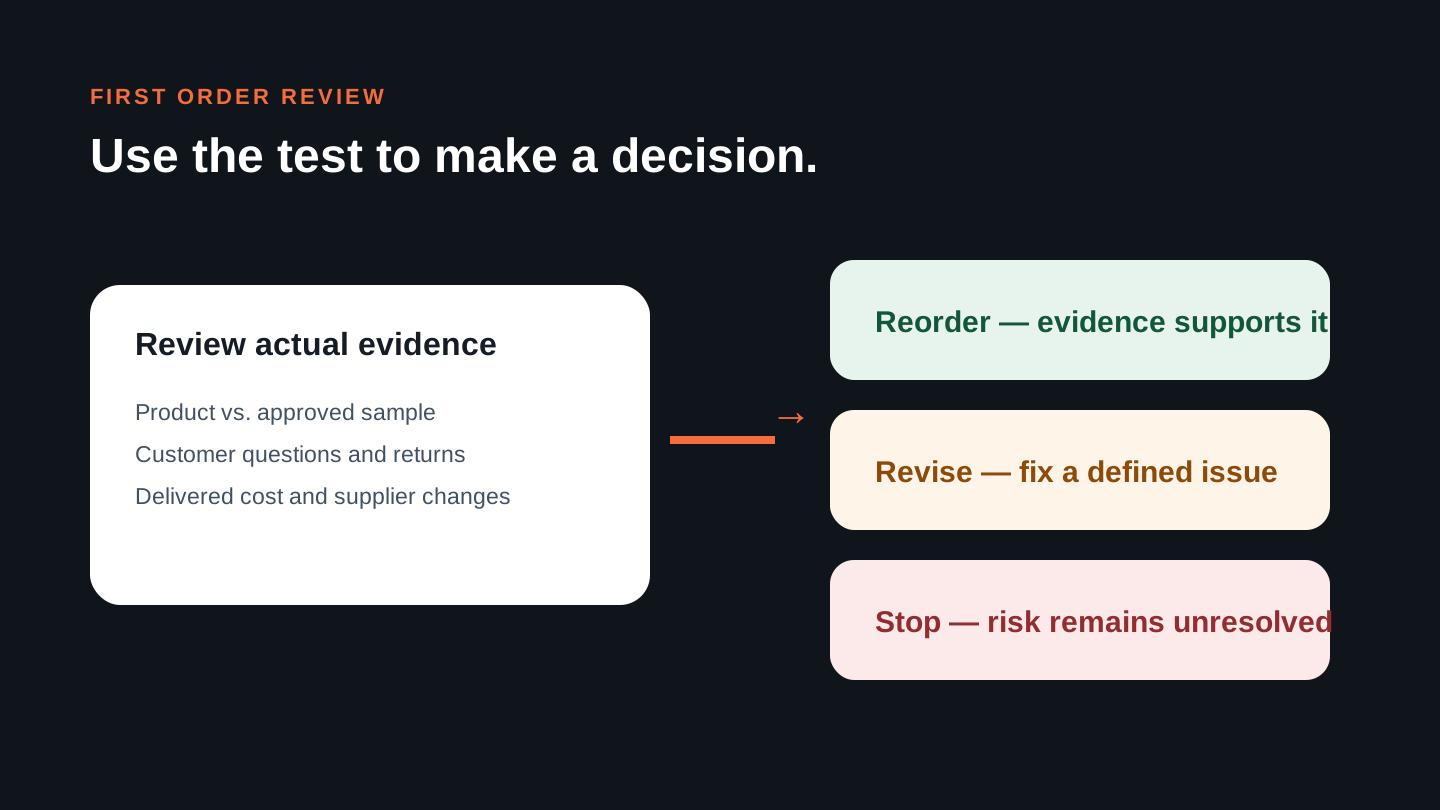
Track customer questions, returns by reason, product defects, packaging damage and whether the listing set accurate expectations. Review actual costs against the pre-order worksheet. One good week is not proof of long-term demand; a few returns do not automatically mean the supplier failed. Look for patterns and separate product design, listing clarity, fulfillment and supplier consistency.
Ask the supplier to disclose any component, material, process, factory or packaging change before a repeat order. Reconfirm the sample reference and update your listing if the approved item changes. A reorder should be a new documented decision, not an automatic repeat of a SKU name.
Frequently asked questions
Where can I source products for Amazon?
Possible routes include manufacturers, authorized distributors, specialist wholesalers and sourcing partners. The right route depends on the exact product, your right to sell it, evidence available, order size and the controls you can establish. Verify the legal seller and product before committing.
Do I need Amazon approval before buying inventory?
Check eligibility for the exact category, brand and product in your Seller Central account before buying. Some items need approval or documentation and some cannot be listed. Requirements can change, so do not use an old third-party checklist as your final answer.
Is a supplier sample enough to prove quality?
No. It helps define an approved reference and reveal obvious problems. Bulk consistency, applicable compliance and packed-goods condition still need product-specific controls.
What documents should I keep?
Keep the specification revision, supplier identity, quotation, purchase order, invoices, payment records, applicable test or authorization evidence, sample approval, inspection records and shipping documents. The exact documents required by Amazon or law depend on the item and market.
Should I choose the cheapest supplier?
Compare the cost of a compliant, sellable unit and the supplier's ability to reproduce it. A lower unit price can be offset by omitted packaging, inconsistent quality, higher freight or missing evidence.
Prepare a sourcing brief before you order
If you have a product reference and a target market, send SourceNEXA your requirements. We can discuss possible sourcing routes, supplier communication, samples and order controls for the specific project. Product eligibility, compliance, fees and commercial terms should be verified for your actual Amazon account and item before any commitment.