
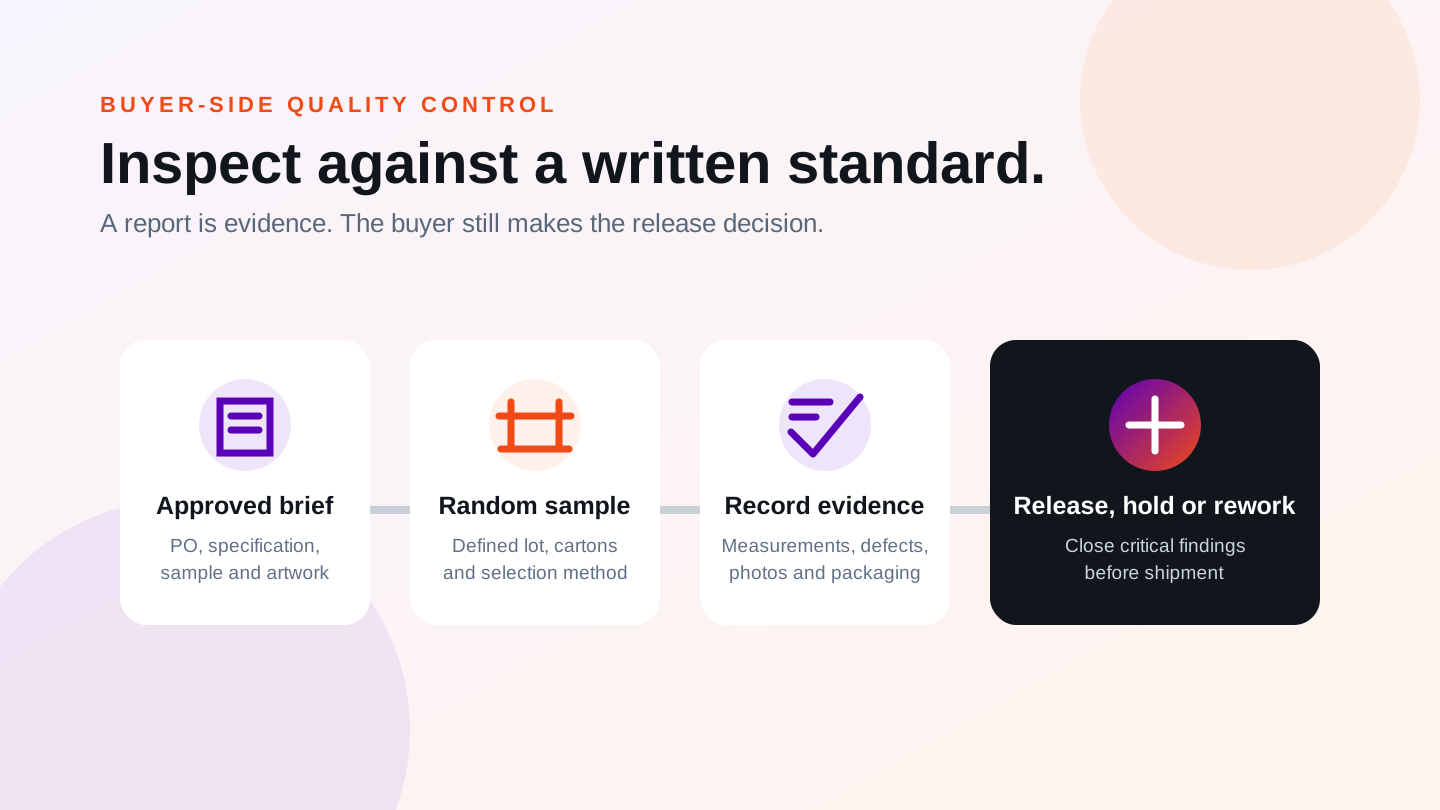
A quality inspection is useful only when the inspector has a written standard and the buyer knows how the result will affect payment, rework and shipment. A generic request to “check the quality” leaves too much room for interpretation. A practical inspection plan identifies the exact order, selects a representative sample, applies product-specific checks and records evidence for a release, hold or corrective-action decision.
For a quality inspection in China, give the inspector the purchase order, current specification, approved sample, artwork, packaging files and a checklist with measurable pass/fail criteria. Confirm the lot and sampling method, classify defects by severity, test the product’s critical functions, verify labels and cartons, and review every exception before authorizing final payment or shipment. An inspection report reduces uncertainty; it does not guarantee that every unit is defect-free.
1. Quality inspection is one part of quality control
Quality control is the wider system used to prevent, detect and correct problems. It starts with the product brief and approved sample, continues through supplier communication and production checkpoints, and ends with inspection records and corrective action. Quality inspection is the evidence-gathering activity at a defined point in that system.
A final inspection cannot repair an unclear specification or undo a material decision made weeks earlier. If color, dimensions, components, tolerances, packaging and required tests were never agreed in writing, an inspector may identify visible defects but still be unable to decide whether the goods match the order.
For that reason, connect the inspection plan to the same documents used for quotations, samples and the purchase order. Our guide to importing from China covers the broader workflow; this article focuses on the inspection and release decision.
2. Define the inspection plan before production
The inspection plan should be agreed before the order is in its final stage. This gives the supplier time to understand the requirements and gives the buyer time to arrange access, documents and any special test equipment.
Start the plan with these control documents:
- Purchase order number, supplier, factory address and inspection location
- SKU list, ordered quantity, color or model breakdown and current revision
- Product specification, drawings, tolerances and approved change records
- Approved sample or clearly identified reference photos
- Artwork, barcode, labeling, manual and retail-packaging files
- Product-specific function and safety-related checks
- Sampling method, defect classes and acceptance or rejection rules
- Required photos, videos, measurements and document copies
- Who may authorize rework, reinspection, payment and shipment
Use revision numbers or dates. A report that compares production against an obsolete artwork file can look complete and still support the wrong decision.
3. Choose the inspection stage that matches the risk
Different stages answer different questions. Do not treat every factory visit as the same service.
| Inspection stage | What it can reveal | When it is useful |
|---|---|---|
| Pre-production | Material, component, tooling and approved-reference readiness | Custom products, new materials or orders where an early mistake would affect the full batch |
| During production | Process drift, workmanship and defects while correction is still possible | Long production runs, tight deadlines or a new supplier |
| Pre-shipment | Finished quantity, workmanship, function, labels, packaging and carton condition | Before the goods are released for shipment or the relevant payment milestone |
| Loading supervision | Carton count, container condition, loading sequence and seal information | High-value shipments, mixed orders or cases where the loading record is important |
A pre-shipment inspection is usually the last practical opportunity to identify a production or packaging problem while the goods remain at origin. SGS describes its pre-shipment scope as verification of quality, quantity, marking, packing and loading against specifications and contractual requirements. The exact scope for your order should still be written rather than assumed.
4. Build a product-specific inspection checklist
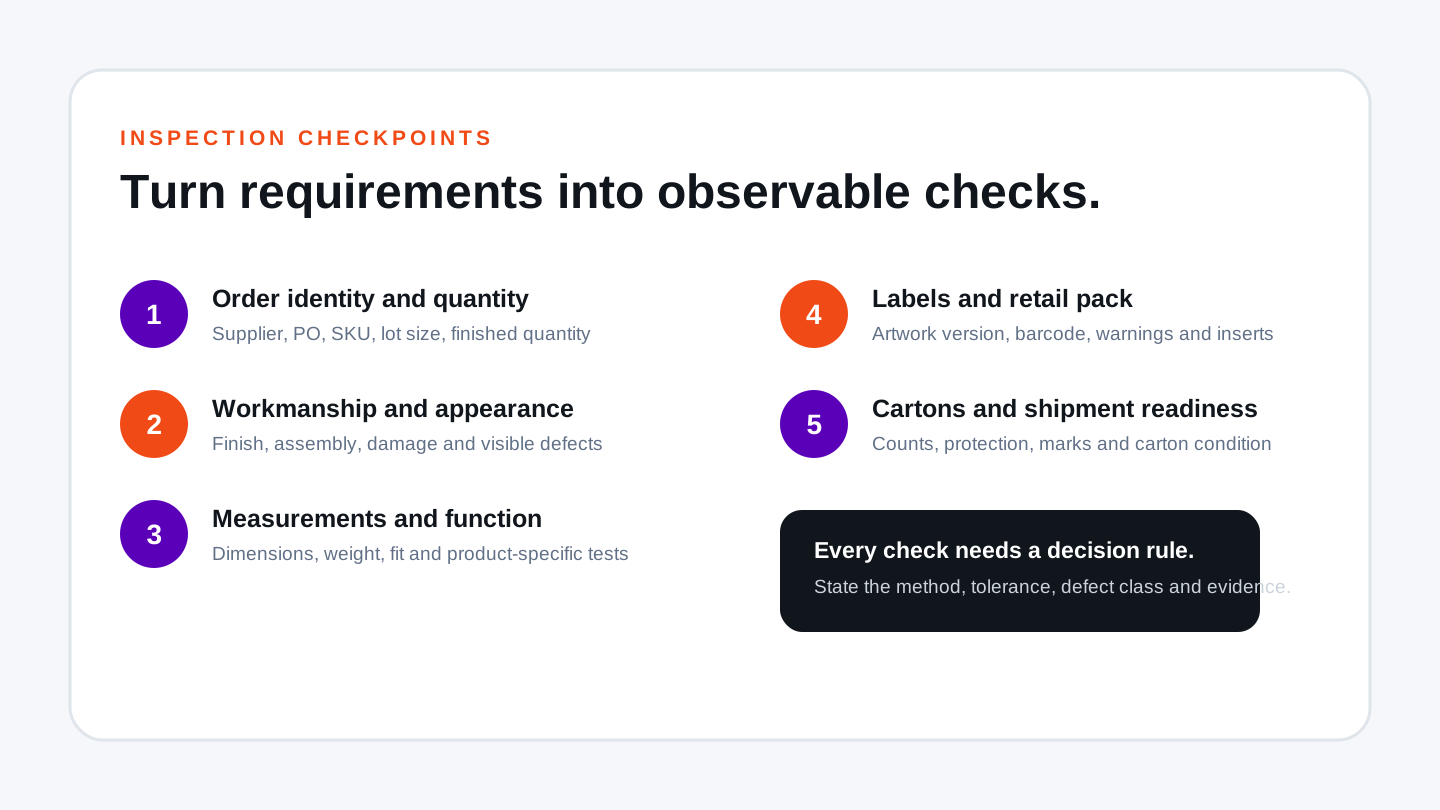
A strong checklist converts every important requirement into something observable. “Good finish” is subjective. “No exposed sharp edge; coating is continuous; approved color reference is matched under the agreed lighting” is much easier to inspect.
| Checkpoint | Examples of what to define |
|---|---|
| Identity | Correct supplier, PO, SKU, model, color, batch and specification revision |
| Quantity | Finished units, packed units, carton count and assortment by model or color |
| Workmanship | Scratches, contamination, assembly, seams, surface finish, alignment and damage |
| Measurements | Dimensions, weight, capacity or other measurable tolerances |
| Function | Product-specific operating, fit, load, cycle or performance checks |
| Components | Material, accessories, fasteners, cables, inserts and included parts |
| Labels | Artwork revision, barcode scan, warnings, origin marking and required information |
| Packaging | Unit pack, protective materials, carton strength, count, marks and shipping condition |
Do not copy one checklist across unrelated products. A cosmetic container, electrical accessory, toy and textile item have different failure modes and different destination-market requirements. Compliance testing and laboratory certification also require the relevant qualified provider; a visual factory inspection is not a substitute.
5. Use sampling and AQL without creating false confidence
Many inspections examine a sample rather than every unit. The lot size, inspection level and agreed acceptance quality limit are used to select a sample and the associated acceptance or non-acceptance criteria. The American Society for Quality explains that attribute sampling records whether specified characteristics are present and counts conforming or nonconforming results; it identifies ANSI/ASQ Z1.4 as a widely used attributes-sampling standard.
AQL is not a promise that the shipment contains exactly that percentage of defects. It is part of a statistical sampling plan. A sampled lot can be accepted while uninspected units still contain defects, and a small or badly selected sample can miss a clustered problem.
Protect the sampling process:
- Define the lot and confirm that the report covers the correct production batch.
- Let the inspector select cartons and units rather than accepting factory-preselected samples.
- Separate critical, major and minor nonconformities according to the product and risk.
- Use direct measurements for dimensional requirements and record the actual values.
- Consider 100% checks for safety-critical or high-cost characteristics when sampling is not sufficient.
6. Require evidence that can be traced to the order
A report should make it possible for someone who was not at the factory to understand what was checked. Require photos of the factory entrance or inspection location, product and carton labels, the opened cartons, the selected sample, measurements, function tests, defects and repacking.
Evidence should show context. A close-up of a scratch proves that a scratch exists, but not which SKU, carton or lot it came from. Record the item identity, sample number and defect class alongside the image. For videos, identify the test and its expected result before the clip starts.
Also check whether required equipment was available and suitable. A measurement without the tool display, unit or calibration context may not support a reliable decision.
7. Review the report before releasing payment or shipment
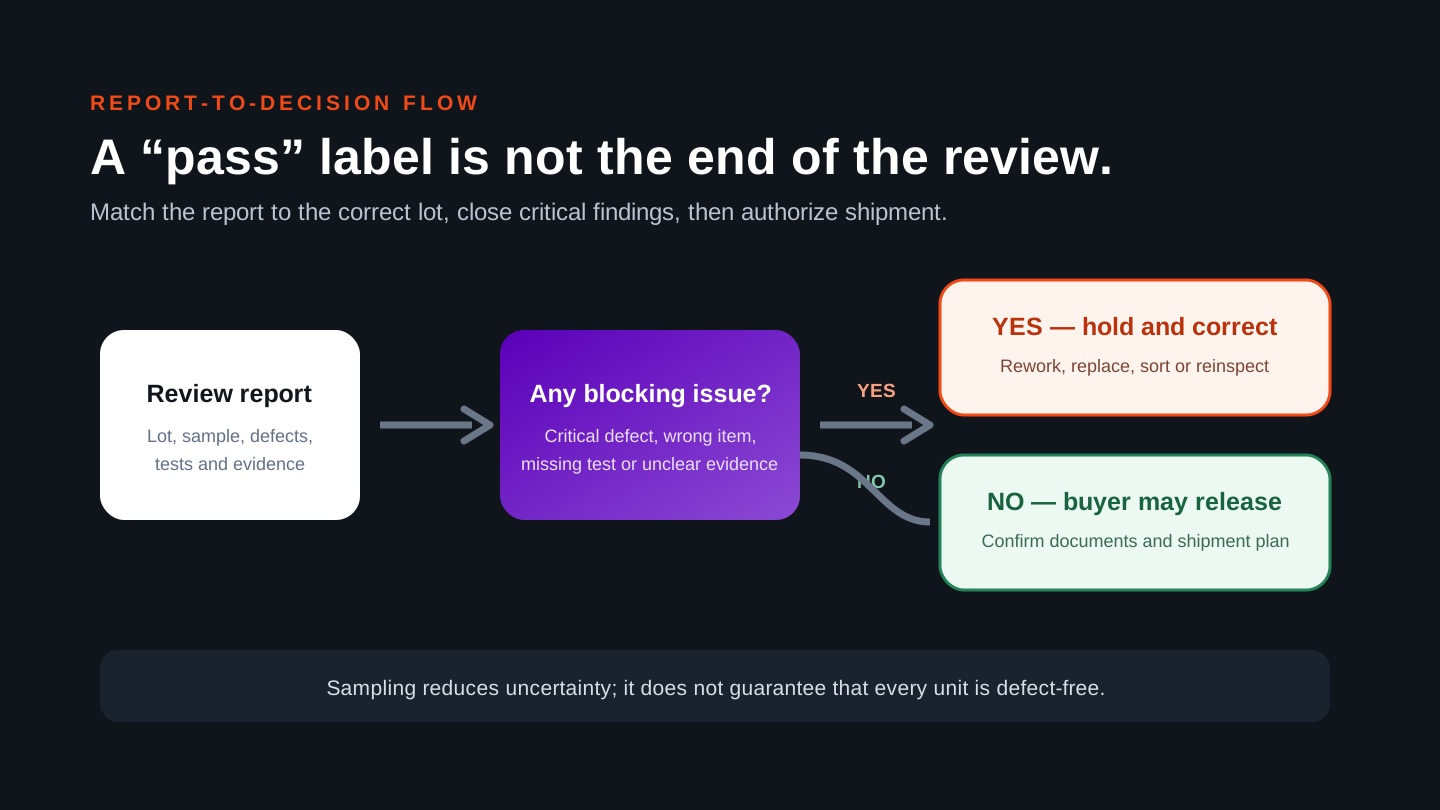
Do not read only the cover-page verdict. Review the body of the report and compare it with the purchase order and current specification.
- Does the supplier, address, PO and product match the order?
- Was enough of the lot finished and available for the selected inspection?
- Were cartons and units selected independently and documented?
- Were all critical checks performed, or are any marked not tested?
- Do actual measurements fall within the agreed tolerances?
- Are defects clearly classified and supported by representative evidence?
- Do quantity, packaging, labels and shipping marks match the order?
- Are there comments that conflict with the summary verdict?
The inspector records findings. The buyer—or the person formally authorized by the buyer—should decide whether to release, hold, accept a deviation or request corrective action.
8. When an inspection fails, control the next decision
A failed inspection should trigger a documented response, not an informal promise. Separate isolated workmanship defects from a systematic material, dimensional, functional or labeling problem. Confirm how many sampled units were affected and whether the issue may extend beyond the sample.
Possible responses include rework, replacement, sorting, repacking, a revised commercial agreement or rejection of the affected goods. The suitable remedy depends on the contract, risk and product. If the supplier corrects the order, request evidence of the completed action and decide whether a reinspection or targeted follow-up check is needed.
Do not change the specification after seeing the result simply to turn a failure into a pass. If the buyer accepts a deviation, record exactly what was accepted, for which lot, and whether it changes future orders.
9. Inspect packaging as part of the product
Products can pass a function check and still arrive unsellable because retail boxes are crushed, accessories are missing, labels are wrong or master cartons cannot withstand the route. Packaging checks should cover the unit pack, inner pack, master carton and pallet or container requirements where applicable.
Confirm actual packed dimensions and weight because these figures affect freight and fulfillment planning. For multi-supplier projects, product sourcing coordination may also include consolidation checks so carton marks, SKU counts and documents remain consistent before a combined shipment.
10. Decide who should perform the inspection
A supplier’s internal quality team is valuable for process control, but its report is not always enough for the buyer’s release decision. Consider an independent third-party inspector, a qualified sourcing team or the buyer’s own staff when the supplier is new, the order is custom or high value, previous quality has varied, or the buyer cannot verify the goods personally.
Before appointing anyone, ask who employs the inspector, what product experience they have, which tests are included, how samples are selected, how conflicts are handled and whether the report will include raw results. Independence alone does not replace product knowledge.
Approved brief → inspection stage → product-specific checklist → representative sample → measurements and tests → documented defects → corrective action → reinspection if needed → buyer release or hold.
Common quality inspection mistakes
- Using “check quality” as the scope: the inspector has no measurable standard.
- Inspecting the wrong revision: an old drawing or artwork file produces a misleading verdict.
- Letting the factory choose samples: the inspected units may not represent the lot.
- Relying on photos alone: dimensions, function and hidden components remain unverified.
- Treating AQL as zero-defect assurance: sampling manages risk but cannot inspect every unit.
- Ignoring packaging: saleable products are damaged or mislabeled during fulfillment and transport.
- Paying or shipping from the summary page: unresolved findings inside the report are missed.
Frequently asked questions
What does a product quality inspection include?
The exact scope is product-specific. It commonly includes order identity, quantity, workmanship, measurements, function, components, labels, retail packaging and master cartons, compared with the purchase order, specification and approved sample.
When should a pre-shipment inspection take place?
It should occur after enough of the order is finished and packed to represent the shipment, but early enough to allow review and corrective action before loading. Define the required production status in the booking rather than assuming it.
What is AQL in quality inspection?
AQL is an index used within an acceptance-sampling plan. Together with the lot size and inspection level, it helps determine a sample and acceptance or non-acceptance criteria. It is not a guarantee that a shipment contains a fixed percentage of defects.
Does a passed inspection mean every unit is defect-free?
No. A sampling inspection provides evidence about a selected sample under a defined scope. It reduces uncertainty but does not inspect every unit or replace applicable laboratory testing and compliance work.
Who decides whether the shipment is released?
The inspector reports results. The buyer or an authorized reviewer should make the commercial release, hold, deviation or corrective-action decision according to the purchase terms and the inspection plan.
What should I send before booking an inspection?
Send the supplier and factory details, purchase order, SKU and quantity breakdown, current specification, approved sample reference, artwork and packaging files, required tests, sampling plan, defect rules and evidence requirements.