
Alibaba supplier verification should answer one practical question: does the company behind the profile have the identity, capability and order controls needed for your specific purchase? A badge, polished storefront or fast quotation can help with discovery, but none of them replaces a product-specific review. The safest approach is to connect the supplier profile to official company records, operating evidence, samples, payment details and a written purchase order.
To verify an Alibaba supplier, identify the exact legal company behind the account, compare that name across the profile, business registration, quotation, invoice and payment beneficiary, and review the available third-party assessment report. Then verify the supplier's role, factory capability and experience with your product; approve a sample and written specification; confirm required compliance evidence with the issuing source; place the order through an agreed protected payment channel; and inspect the goods before the release milestone. Verification reduces uncertainty, but it does not guarantee product quality or future performance.
1. Understand what supplier verification can and cannot prove
Verification is not one yes-or-no check. It is a chain of evidence. A platform may confirm that a company exists or that an assessment took place, but the buyer still needs to decide whether the assessed entity is the company issuing the quotation, receiving payment and producing the requested product.
Alibaba states that its Verified Supplier process can produce a comprehensive assessment report from a third-party inspection company. That report can be useful evidence, but buyers should read the report rather than relying on the label alone. Check the report date, company name, address, business type, assessed facilities, product scope and any limitations.

2. Identify the exact legal entity behind the profile
Start by recording the supplier's legal company name in Chinese and English, Alibaba profile URL, registered address, unified social credit code if available, contact name, email domain and telephone number. English trading names may not be unique, so the Chinese legal name and registration number are usually more reliable identifiers for a mainland China company.
Compare that identity with every document and message. If the quotation uses one company, the invoice names another and the requested bank account belongs to a third party, stop and ask for a documented explanation before paying. A related export company or payment agent may have a legitimate role, but the relationship should be clear in writing and consistent with the contract.
3. Read the Verified Supplier assessment report
Do not treat the assessment report as a decorative attachment. Use it to create follow-up questions. Review:
- The exact company assessed and whether it matches the seller profile
- The assessment date and whether the information is still current
- Whether the business is described as a manufacturer, trading company or both
- The listed production address, equipment, production lines and workforce information
- The product categories actually observed during the assessment
- Quality-management procedures and the evidence used to support them
- Export markets or transaction information, noting whether it is independently verified
- Any sections that are blank, self-declared or outside the assessor's scope
If your product, factory address or quoted legal entity does not match the report, ask the supplier to explain the difference and provide current evidence. A report on one facility does not automatically cover another subcontractor.
4. Check the official business registration
For a mainland China company, search the legal Chinese name or unified social credit code in the National Enterprise Credit Information Publicity System. The interface is primarily Chinese and may require a verification step. Review the registration status, legal representative, registered address, establishment date, business scope and any public administrative information shown.
A broad business scope is not proof that the company manufactures every listed item. It only helps confirm the entity and the activities it is registered to conduct. If the company name is difficult to match, request a clear copy of the business license and compare the Chinese characters and credit code with the registry result.
5. Confirm whether you are dealing with a factory, trader or export partner
A trading company is not automatically a poor choice. Traders can combine categories, manage smaller orders and coordinate factories. A factory is not automatically the best choice either; some factories have limited export support or use external partners for certain products.
What matters is transparency. Ask who owns the production facility, who employs the workers, where your order will be made, who controls tooling and raw materials, who will sign the purchase order, and who will receive payment. If production is subcontracted, ask how the supplier qualifies and monitors that factory.
6. Verify capability with current, product-specific evidence
Catalog photos do not prove current production capability. Request evidence that connects the facility to your product and your proposed order. A structured live video call can be useful when an on-site visit is not practical. Ask the representative to move from the entrance or company sign to the relevant workshop, equipment, material storage, in-process inspection area, finished-goods area and packaging station without relying only on a prerecorded promotional video.
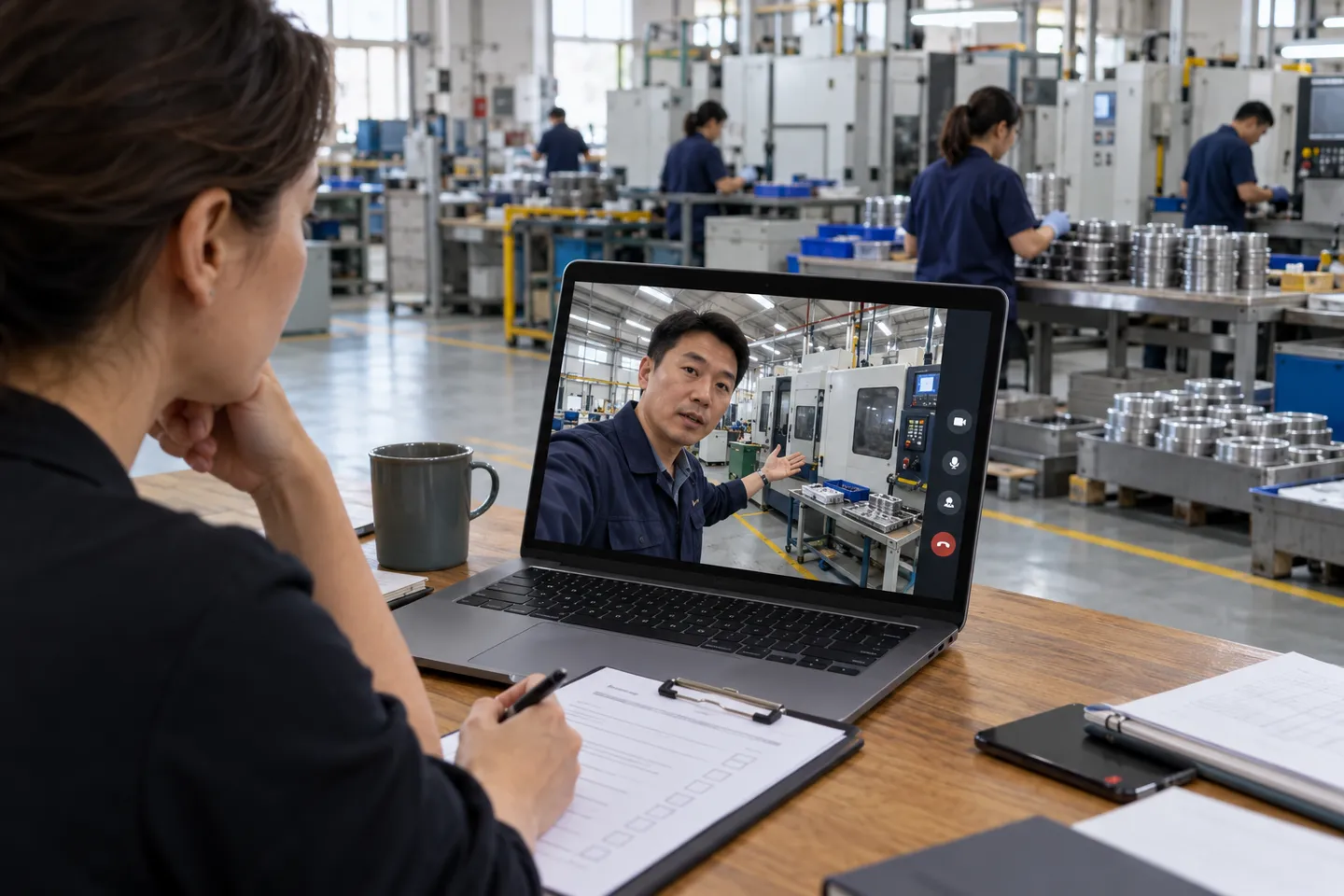
Ask product-specific questions: which machines or processes are used, which steps are performed in-house, what is outsourced, what tooling is required, how critical dimensions are measured, how materials are identified, and how nonconforming goods are controlled. Follow up on vague answers with photos, records or an independent factory audit when the order risk justifies it.
7. Check product experience and compliance evidence
Request evidence for products similar in material, process and complexity—not merely products in the same broad category. Review dated photos, sample records, test reports or production documents only to the extent they can be legitimately shared.
For test reports and certificates, compare the applicant or manufacturer name, product model, standard, issuing laboratory, issue date and covered scope with your order. Contact the issuing body or use its official verification channel when available. A logo on a PDF is not enough. Destination-market compliance can depend on the product, materials, claims, labeling and sales channel, so obtain qualified regulatory advice when necessary.
8. Use samples to turn claims into evidence
Approve a sample against a written brief rather than by appearance alone. Record dimensions, materials, color reference, functions, components, accessories, labels and packaging. Photograph the approved unit and identify the revision date. For custom work, clarify whether the sample is handmade, produced with temporary tooling or made by the intended production process.
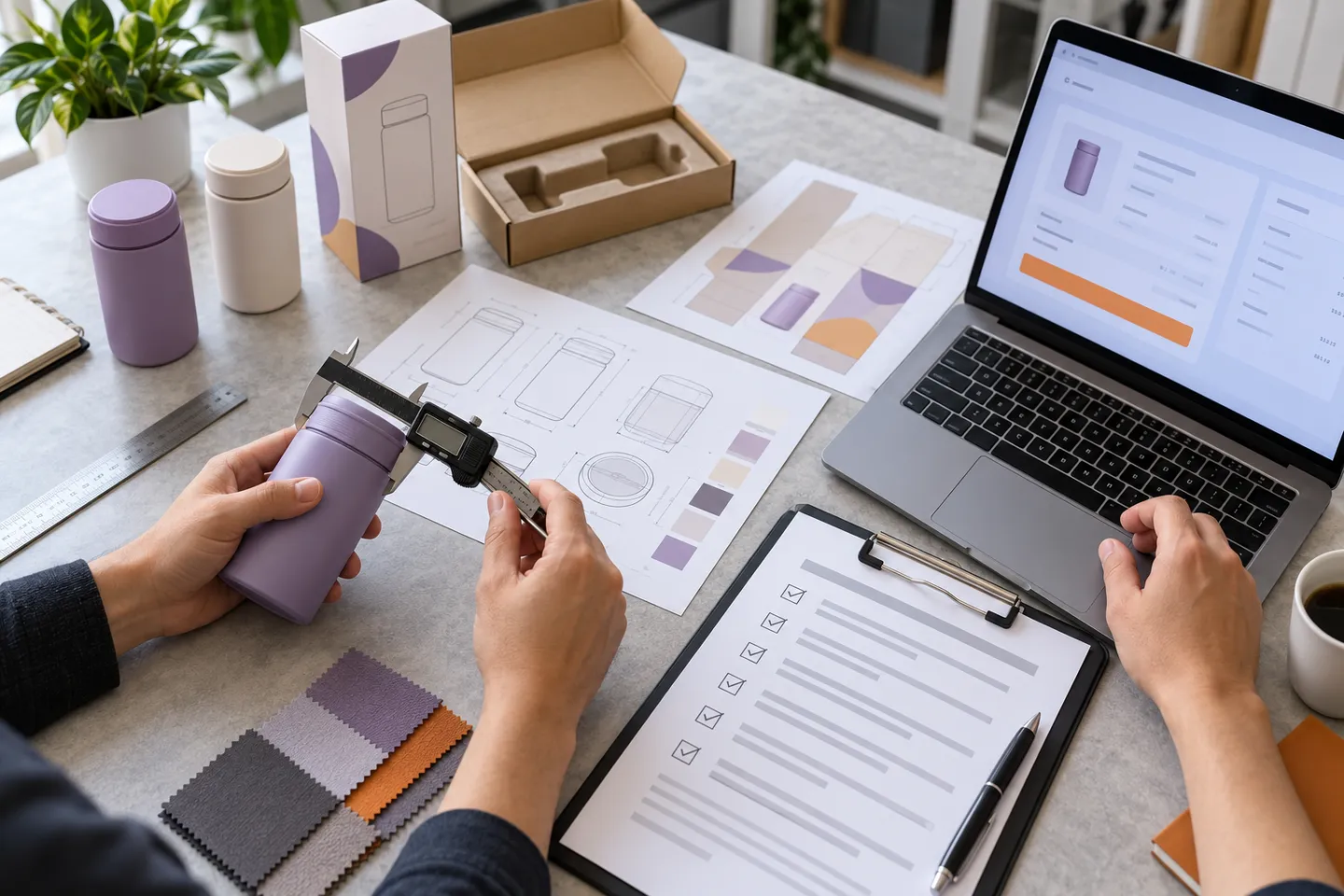
Keep one approved sample with the buyer and, where practical, one signed or clearly identified reference with the supplier. The production order should state which sample and specification revision govern acceptance. Our quality inspection checklist explains how to convert those requirements into inspection checkpoints.
9. Match the quotation, contract, invoice and payment beneficiary
Before payment, reconcile the supplier profile, quotation, purchase order, pro forma invoice and beneficiary information. Confirm the company name, address, product description, quantity, specification revision, price, Incoterm, payment milestones and delivery terms.
Treat a last-minute bank-account change as a high-risk event. Verify it through a known contact using a separate channel and obtain updated documentation. Do not rely only on an email in the same thread, because compromised email accounts and impersonation can make a fraudulent request appear consistent.
10. Understand what Trade Assurance covers
Alibaba describes Trade Assurance as an order-protection program that provides secure payment options, protection for specified product or shipping issues and mediation. The current protection depends on the order terms, eligibility and platform rules.
Keep the product specification, quantity, quality requirements, ship date and other critical commitments inside the protected order. An off-platform promise that is absent from the order may be harder to rely on in a dispute. Read the current protection terms before paying, use the designated payment route and retain messages, samples, inspection reports and shipping records.
11. Control the first order instead of relying on trust
Verification should change how the order is managed. Start with a quantity that can validate the supplier, product, packaging and logistics without creating unnecessary inventory exposure. Use clear payment milestones tied to documented deliverables, and do not release a milestone only because the supplier says production is complete.
Define inspection timing before production. A pre-shipment inspection can check finished quantity, workmanship, measurements, function, labels, packaging and carton condition against the approved requirements. The buyer should review the full report and resolve exceptions before the release decision. See the broader import-from-China process for landed-cost, shipping and customs planning.
12. Record the result in a supplier verification scorecard
A scorecard helps different team members use the same evidence and prevents a persuasive sales conversation from replacing due diligence.
| Area | Evidence to record | Decision question |
|---|---|---|
| Identity | Legal name, credit code, registry status, profile and document match | Are we contracting with the entity we verified? |
| Role | Manufacturer, trader, exporter and subcontractor relationships | Who controls production and who is responsible? |
| Capability | Relevant equipment, processes, people, capacity evidence and quality controls | Can this facility make this product to the written requirement? |
| Product | Approved sample, specification, packaging and relevant test evidence | Is there a measurable acceptance reference? |
| Commercial | Comparable quotation, PO, Incoterm, milestones and beneficiary match | Are price, responsibility and payment controls clear? |
| Order control | Inspection plan, corrective-action route and release authority | Can problems be found and resolved before shipment? |
Record unresolved items as open risks rather than converting missing evidence into a pass. Verification is complete only when the remaining uncertainty is acceptable for the size, complexity and consequences of the order.
Profile → legal entity → official registration → assessment report → supplier role → factory capability → product evidence → sample approval → matched payment details → protected order → inspection → controlled first order.
Common Alibaba supplier verification red flags
- Entity mismatch: profile, invoice and bank beneficiary use unrelated company names.
- Refusal to identify the factory: the seller will not explain where or by whom the product is made.
- Generic evidence: factory photos, certificates or reports do not cover the quoted product or entity.
- Pressure to move payment off-platform: the payment route changes without a documented commercial reason.
- No revision control: samples, drawings, artwork and quotations use different specifications.
- Unrealistic agreement: the supplier accepts every price, deadline and custom requirement without clarifying feasibility.
- Inspection resistance: the supplier delays access or tries to select every inspected unit.
Frequently asked questions
Does Alibaba verify every supplier?
Supplier status and verification levels vary. Review the status shown on the specific profile and read the available assessment information. Do not assume that platform membership proves the supplier can meet your product requirements.
Is a Verified Supplier badge enough?
No. It can be one useful signal, but buyers should still match the legal entity, review the assessment report, confirm factory and product capability, approve a sample, verify payment details and control the order.
How do I verify a Chinese business license?
Request a clear copy, identify the Chinese legal name and unified social credit code, and search those details in China's National Enterprise Credit Information Publicity System. Compare the result with the supplier profile and transaction documents.
Can a trading company be reliable?
Yes. A transparent trading company can add value through category knowledge, coordination and consolidation. Verify its legal identity, factory relationships, product control and contractual responsibility rather than rejecting it based only on business type.
Does Trade Assurance guarantee product quality?
No. It is an order-protection program subject to current terms and the commitments recorded in the order. Buyers still need a clear specification, samples, evidence and inspection controls.
What should I verify before sending a deposit?
Confirm the legal entity, supplier role, product and factory capability, approved sample, written specification, order terms, payment beneficiary and the exact protection or dispute process that applies to the transaction.