
To buy jewelry wholesale, start with a buyer brief and a small test assortment, then compare suppliers against the same product and commercial requirements. A low unit price alone does not show whether the product can be described accurately, displayed well, delivered at a workable cost, or reordered consistently. The process below is written for boutique retailers planning a first or newly expanded jewelry range.
Define who will buy the jewelry, the retail price positions you want to test, and the product categories you can present coherently. Shortlist suppliers, send one consistent request for quotation, verify the business and product details, inspect samples, calculate the total delivered cost, and approve written specifications before the first order. Keep a record of what sells and what customers return or question before reordering.
1. Define your customer and buying brief
Do not begin by asking which designs look attractive in a supplier catalog. Begin with the person expected to buy them. Record the customer's typical style, how the jewelry will be worn, the acceptable retail price range and whether the purchase is usually an everyday accessory, a gift, an occasion item or an impulse add-on.
A boutique that serves customers looking for expressive statement pieces will build a different assortment from one focused on restrained daily accessories. The goal is not to predict every customer's taste. It is to make the first range coherent enough that staff and shoppers can understand why the pieces belong together.
Write the direction in one sentence before reviewing products. For example: “a compact group of visually coordinated necklaces for customers who prefer noticeable accessories” is more useful than “fashion jewelry.” The sentence becomes a filter when a supplier presents hundreds of options.
2. Choose a focused first assortment
A new jewelry section does not need to launch rings, earrings, necklaces, bracelets and anklets at the same time. Starting with one or two categories simplifies display planning, sample comparison, product photography and staff training. It also makes the results easier to interpret: the retailer can see whether customers respond to the selected direction before expanding into adjacent categories.
Within those categories, choose meaningful variation. Shape, scale, color direction, closure type and wearing occasion can create useful differences. Avoid ordering many near-duplicates that compete for the same customer without teaching the buyer anything new.
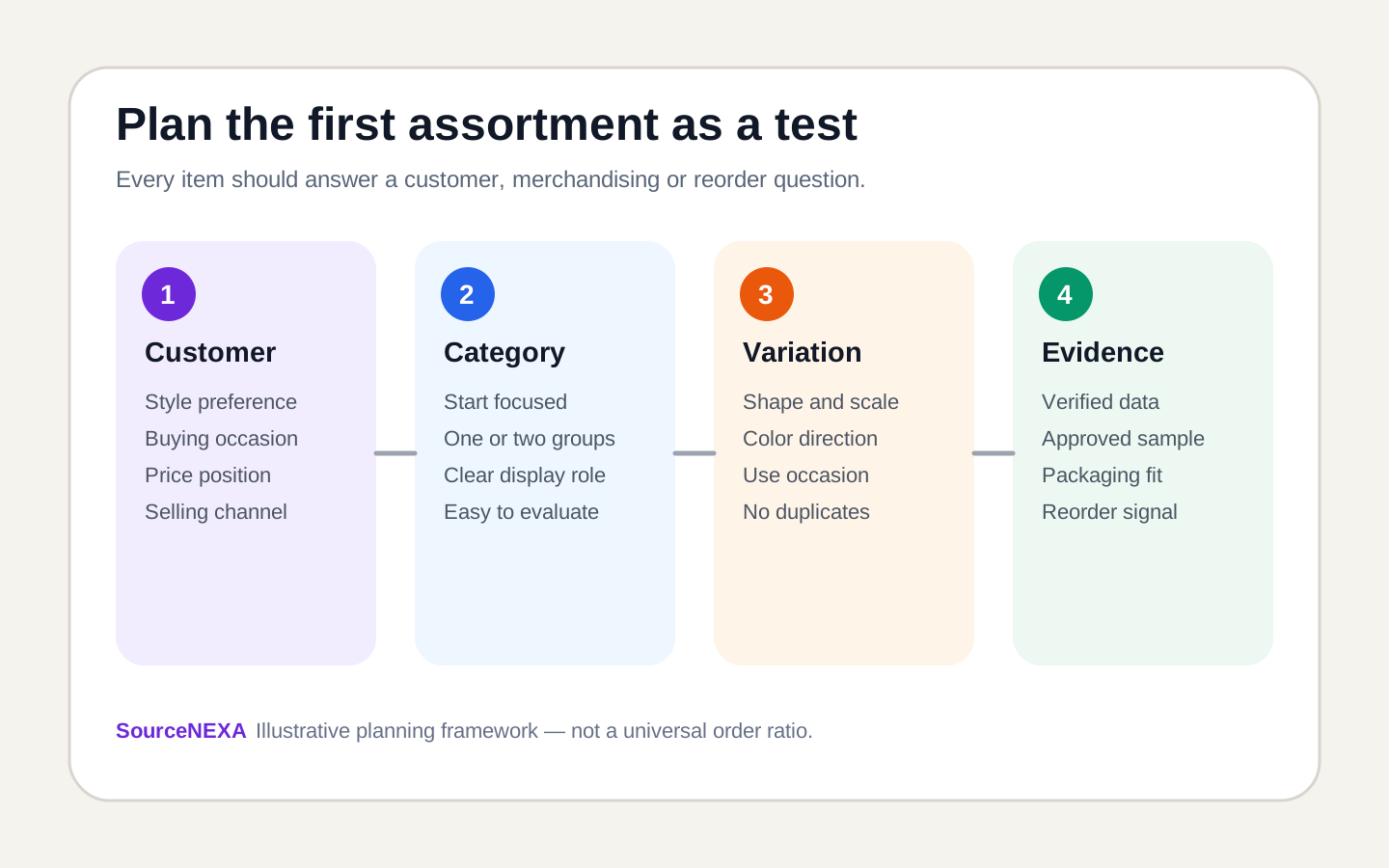
3. Plan styles and quantities deliberately
Breadth means the number of different styles or variations. Depth means the number of units held behind each one. A first assortment usually needs enough breadth to reveal preferences, but buying deeply into unproven styles increases inventory risk. The exact balance cannot be copied from another retailer because customer traffic, selling channel, replenishment time and storage capacity differ.
Assign a reason to every SKU. A piece may test a new silhouette, fill a missing price position, support a gift purchase or create a stronger display. If two items have the same role, decide whether the second adds useful choice or only duplicates inventory.
Keep unknowns visible. If minimum quantities, replenishment time, packaging cost or color consistency have not been confirmed, record them as open questions. Do not convert a supplier's general statement into an assumption for a specific product.
4. Find and shortlist wholesale jewelry suppliers
Where should a boutique buy wholesale jewelry? Possible routes include a specialist wholesaler, a trade marketplace, a trade show, or a sourcing partner that coordinates quotations from multiple suppliers. Each route offers a different balance of assortment choice, communication, documentation and order handling. A listing or attractive showroom is a starting point for research, not proof of who will produce and ship the order.
Build a shortlist around the jewelry category, intended retail market and order structure. Ask whether the company is the seller of record, which products it can actually quote, how samples are supplied, and whether packaging and repeat orders can be handled. If purchasing from several suppliers, establish who will check goods and coordinate shipping. Record the company name and contact details used for each quote so that offers do not get mixed together.
5. Request comparable quotations
Supplier quotations become difficult to compare when each company receives different information. Prepare one brief containing the product references, estimated quantity, destination, required product data, packaging needs, labeling needs, target schedule and any customization under consideration.
Ask each supplier to separate confirmed facts from optional services. The product name, dimensions, weight, material description, available colors, packaging unit, order minimum, sample terms and production timing should be recorded product by product. If an item is shown only in a photo, request the missing specification rather than writing it yourself.
Compare the complete offer, not only the unit price. A lower quotation may exclude packaging, labels, domestic delivery, inspection or export preparation included elsewhere. The existing SourceNEXA guide to supplier verification explains how to match the quoted company, sample and payment details before ordering.
6. Verify the supplier and payment details
Before paying for a wholesale order, match the company named in the quotation to its business documentation, invoice and payment beneficiary. Ask who is responsible for the approved sample, production or stock release, packaging, inspection and any defect resolution. A marketplace badge, attractive catalog or fast reply is not a substitute for checking the actual transaction documents.
Clarify whether the quoted terms apply to the sample, first bulk order and future reorder in the same way. Keep key decisions in writing, including the product revision, accepted variations, quantity, packaging, payment milestones and the agreed response if delivered goods differ from the approved reference.
7. Inspect samples before committing to the range
A physical sample turns catalog language into something measurable. Inspect the features relevant to that product: overall dimensions, weight, surface appearance, sharp edges, closures, moving parts, symmetry, paired-item consistency, attached components and packaging fit. Do not apply the same checklist blindly to every type of jewelry.
Record the sample with a SKU, date, supplier, photos and specification revision. If an issue is found, decide whether it is a sample defect, a design characteristic or a production-control requirement. The approved reference should be identifiable later so that bulk goods are not compared with a different version.
Photography samples and bulk-approval samples also serve different purposes. A visually clean item may be suitable for photography, but the buyer still needs a documented reference for production acceptance. If the same unit serves both roles, record that decision.
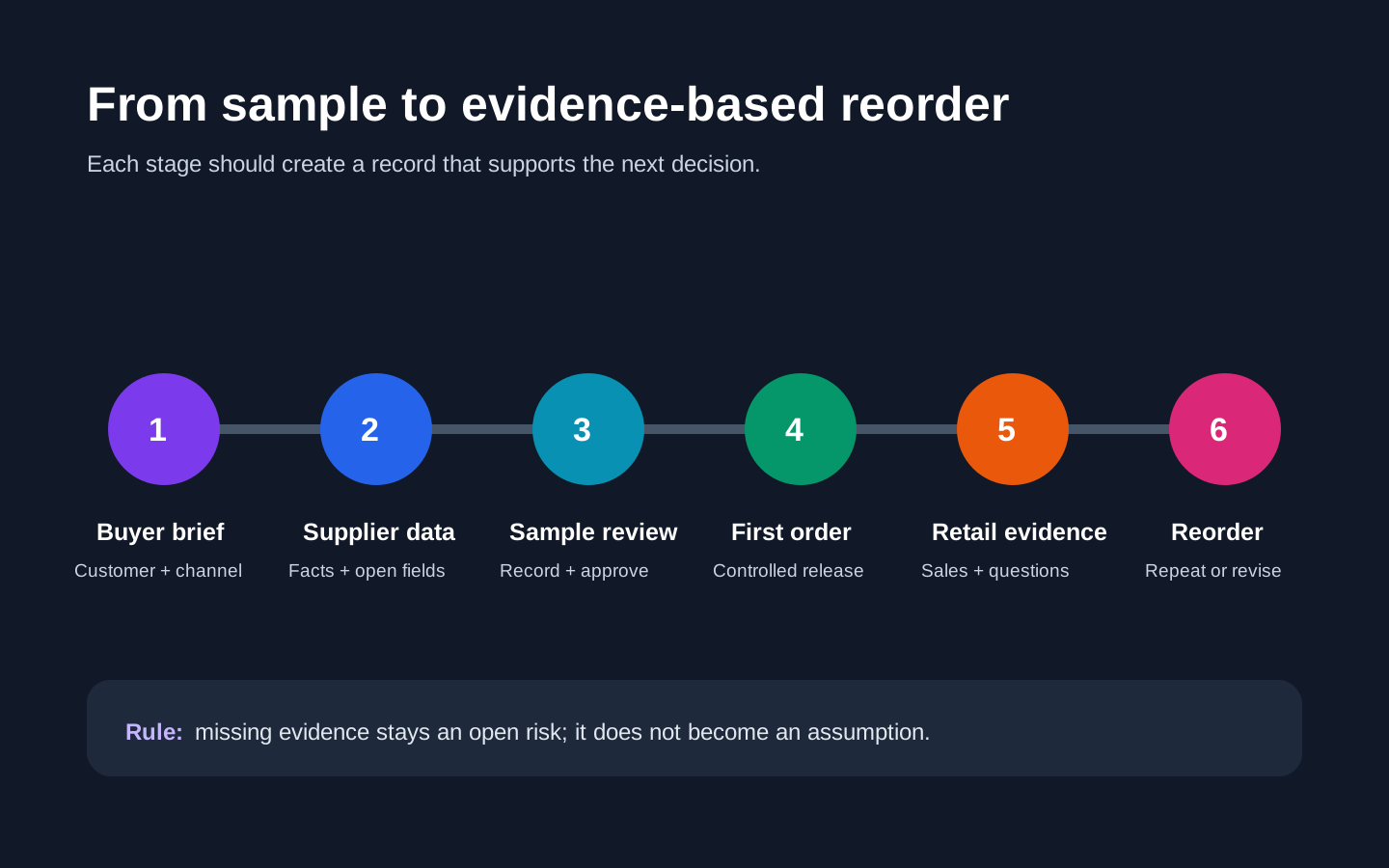
8. Verify product claims and descriptions
Retail product pages and packaging should use product facts that can be supported. Material names, plating descriptions, stone descriptions, care instructions and performance claims should match supplier documentation and appropriate testing where required. Terms such as “hypoallergenic,” “waterproof,” “tarnish-free” or a precious-metal description should not be added because they sound persuasive.
For the United States, review the current FTC Jewelry Guides and obtain qualified advice for the specific product and claims. Other markets may have different product-safety, chemical, labeling and consumer-protection requirements. The destination and sales channel should be identified before the final product description is approved.
If evidence is missing, use a neutral verified description or keep the field pending. Accurate language protects the retailer from promising more than the available evidence supports.
9. Plan packaging, display and photography together
Packaging is part of the assortment decision. A pouch, box, card, barcode label or protective wrap changes cost, display method and shipping volume. Confirm whether packaging is included, supplied separately or applied during a later consolidation step.
Lay the test assortment out as it will appear in the store or online collection. Products that look attractive individually may not form a coherent group. Check whether the range has a clear visual center, whether price positions are understandable and whether the selected packaging fits the intended display.
Before photography, prepare a SKU list and shot brief. Match each sample to its verified name, variation and product data. Identify the required front, side, detail, closure, scale and packaging views. This reduces the risk of photographing the wrong variation or publishing details that belong to another item.
10. Calculate the full delivered cost
Compare suppliers on a delivered, sellable-unit basis. Start with the product and packaging price, then add samples where relevant, domestic collection, export handling, international freight, insurance, customs brokerage, duties and taxes, destination delivery and any inspection or consolidation cost. The applicable charges depend on the product, route, destination and agreed Incoterm; a qualified customs broker should confirm classification and current import charges.
Use the same currency and cost boundary for every offer. For example, a supplier's ex-works unit quote should not be compared directly with another supplier's delivered quote. Note what each quotation excludes, how many units will be sellable after any defects, and what retail margin remains after the full cost and expected selling expenses. Do not rely on a generic industry markup as a substitute for your own worksheet.
11. Place a controlled first order
The first order should have a learning objective. Decide which signals will be recorded: customer questions, products handled or tried on, online saves, sales, return reasons, packaging issues and requests for unavailable variations. The retailer does not need to expose private customer information; a simple SKU-level record is enough to improve the next decision.
Do not interpret one fast sale or one enthusiastic comment as proof that an entire category should be reordered deeply. Look for repeatable evidence across the test period and note whether promotion, placement or a temporary event affected the result.
When the order is ready, convert the approved sample and specification into inspection checkpoints. The SourceNEXA quality inspection checklist shows how to define critical, major and minor defects and review evidence before release.
12. Prepare for reorders before the launch
A successful style is useful only if the retailer understands how it can be replenished. Before launch, confirm whether the item is ready stock or made to order, whether variations share the same minimum, how long the quotation remains valid, what may change between batches and which packaging components require separate preparation.
Keep the supplier, SKU, approved sample, specification, packaging artwork and last order terms connected in one record. When a reorder is placed, ask the supplier to identify any material, process, factory, packaging or component change. A repeat SKU name does not guarantee that every detail remains unchanged.
If the boutique combines jewelry with products from other suppliers, review whether consolidation is practical. Carton dimensions, fragile packaging, labeling and destination requirements should be checked before combining shipments.
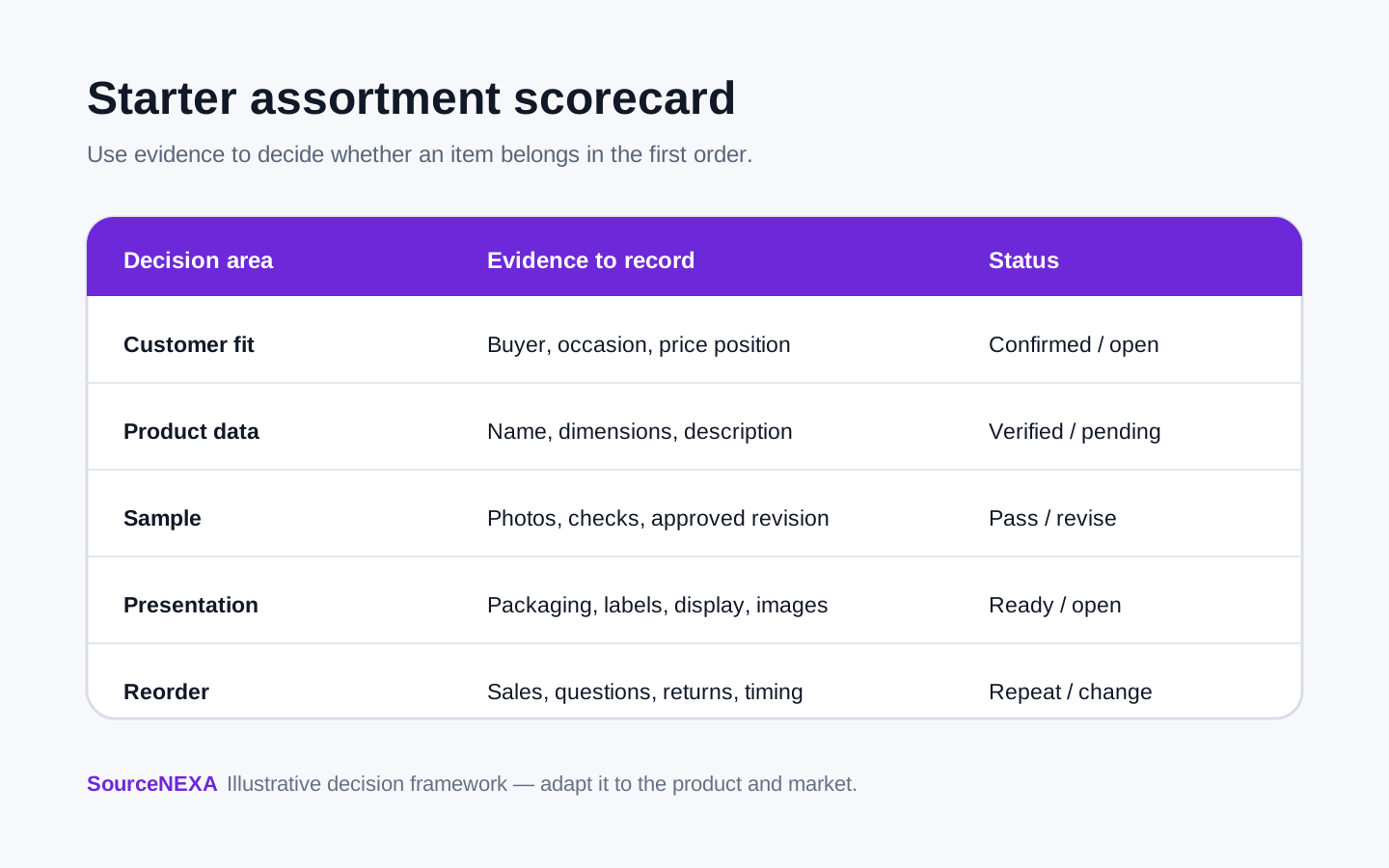
13. Use a wholesale buying scorecard
A short scorecard prevents the final decision from depending only on appearance or unit price.
| Area | Evidence to record | Decision question |
|---|---|---|
| Customer fit | Target buyer, use occasion and price position | Does this item have a clear role? |
| Product data | Verified name, dimensions, material description and variation | Can it be described accurately? |
| Sample | Photos, measurements, function and visible quality notes | Is there an approved reference? |
| Presentation | Packaging, labels, display and required photographs | Is it ready for the intended channel? |
| Commercial | Complete quotation, minimums, delivered cost, sample terms and replenishment | Can the offer be compared and repeated? |
| Test result | Questions, sales, returns and reorder requests | What evidence supports the next order? |
Customer → focused assortment → supplier shortlist → comparable RFQ → business verification → samples → verified product data → delivered-cost worksheet → controlled first order → retail evidence → reorder.
Frequently asked questions
How many jewelry categories should a new boutique start with?
There is no universal number. One or two focused categories can make the first test easier to display and evaluate, but the right choice depends on the boutique's customer, available space, budget and ability to replenish.
Should a boutique buy many styles or more units of a few styles?
The first assortment should balance breadth for learning with enough depth for a meaningful test. Avoid deep orders of unproven styles and avoid so many unrelated styles that the results become difficult to interpret.
What should be checked on a jewelry sample?
Check the features relevant to the item, including dimensions, weight, visible finish, edges, closures, moving parts, symmetry, paired consistency, attached components and packaging. Record the approved sample and specification revision.
Can supplier photos be used for a boutique listing?
Only when the buyer has permission and the image accurately represents the exact item and variation being sold. Original photographs give the retailer more control over presentation and help prevent mismatched product information.
What information should be confirmed before ordering wholesale jewelry?
Confirm the product specification, variation, packaging, labeling, sample approval, supplier identity, complete quotation, order minimum, timing, payment beneficiary, inspection plan and defect-resolution process.
When should a boutique reorder a jewelry style?
Use several signals rather than one sale: repeat customer interest, sales relative to display time, return reasons, remaining stock, replenishment time and whether the product still fits the assortment direction.
Turn a wholesale jewelry idea into a controlled sourcing brief
SourceNEXA can help buyers compare suppliers, coordinate samples, organize product and packaging requirements, review inspection information and consolidate orders according to the needs of the project. Browse the current jewelry sourcing examples or send a product reference and requirement to begin a sourcing discussion.